
 EN
EN
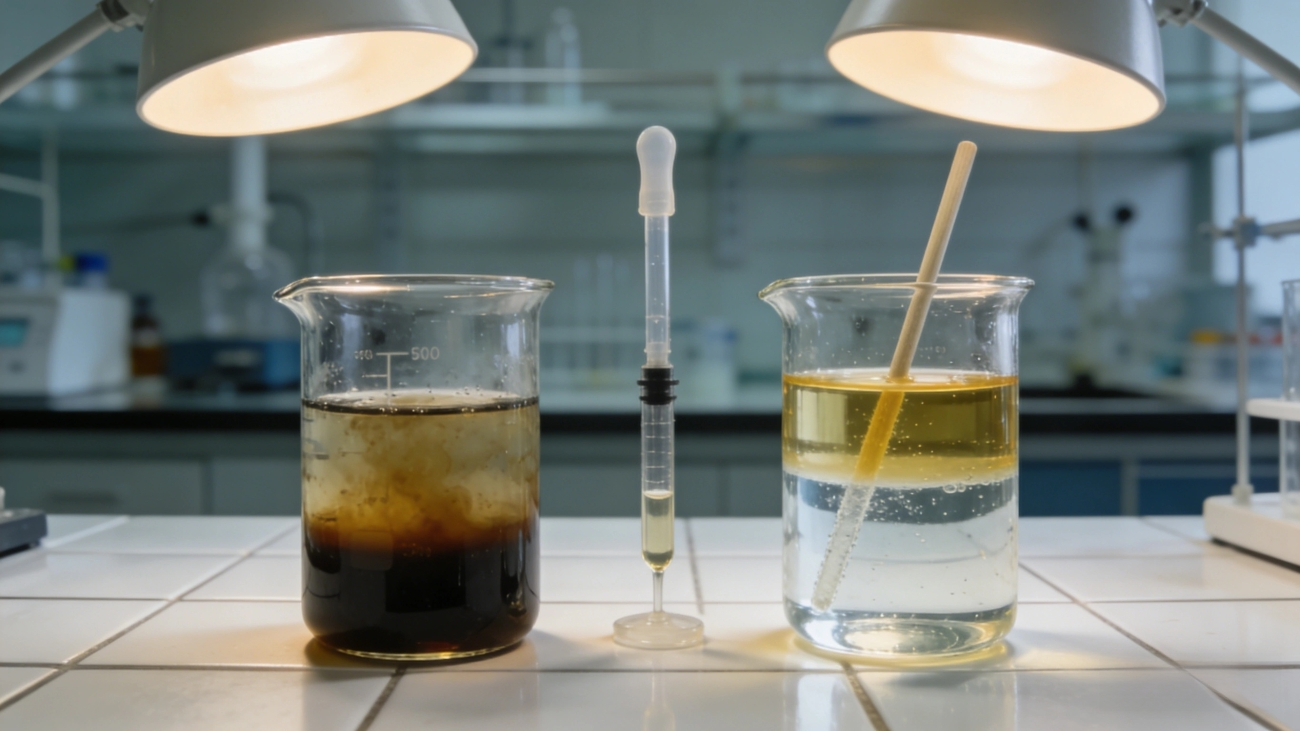
Why Crude Oil Forms Stable Emulsions and What Makes an Emulsifier Effective
Natural Emulsifiers in Crude: Asphaltenes, Resins, and Naphthenic Acids
Natural crude oil actually has some built-in substances that help it mix with water. These include things like asphaltenes, resins, and those naphthenic acids we often talk about. When there's all that shaking and mixing during production, these molecules tend to gather at the boundary where oil meets water. They create sort of protective layers around tiny water droplets floating in the oil, which stops those droplets from coming together again. The big, complicated asphaltenes are particularly good at this because they stack together nicely on surfaces. Meanwhile, the naphthenic acids work differently by changing how charged the interface becomes and lowering surface tension. What's really interesting is that even when there's just a little bit of asphaltene (less than 0.1% by weight), it can still make super stable emulsions. This makes the whole mixture much thicker than regular crude oil, sometimes up to five times thicker. And thicker means harder to pump and process, which naturally drives up operational costs for refineries and transport companies alike.
Key Demulsification Mechanisms: Flocculation, Coalescence, and Interfacial Film Disruption
Effective demulsification proceeds through three interdependent stages:
- Flocculation, where droplets aggregate via charge neutralization or polymer bridging;
- Coalescence, enabling merged droplets to grow large enough for gravitational separation; and
- Interfacial film disruption, wherein demulsifier molecules competitively displace natural stabilizers at the oil-water interface.
Top quality chemical demulsifiers work fast, absorbing onto surfaces quicker than what happens naturally, then either dissolving or loosening those tough interface films between oil and water. This action brings down the stickiness at these interfaces by around 70 to almost 90 percent in most cases. What makes these products effective boils down to getting the right mix of water loving and oil loving properties in their formulation. This balance determines how well they actually work at breaking emulsions and whether they'll play nicely with different types of crude oils. Field tests have shown that when everything lines up just right, processing times for separators can drop by over 50%, making operations much more efficient across the board.
Selecting the Right Emulsifier: Surfactant Chemistry, HLB, and Crude-Specific Compatibility
Nonionic vs. Ionic Emulsifiers: Interfacial Activity and Salt Tolerance Trade-offs
Nonionic emulsifiers tend to handle high salt content in produced water better than other types, though they don't perform as well at creating strong interfaces between oil and water. On the flip side, ionic emulsifiers can really break down those interfaces, especially when dealing with low salinity water. But watch out for problems in salty environments where these ionic versions might actually form deposits or lose effectiveness completely. The Hydrophilic-Lipophilic Balance or HLB system gives operators something concrete to work with when choosing the right emulsifier. Most folks find that HLB values around 4 to 6 work pretty well for making water-in-oil emulsions in crude oil processing. Getting this balance wrong often means incomplete separation of water from oil, which drives up operational costs significantly. Some studies published last year in Petroleum Science showed cost increases reaching about 15% due to poor HLB matching, so getting this right matters quite a bit for bottom line results.
Polymeric Emulsifiers and Branched Architectures for Enhanced Film Penetration
Branched chain polymeric emulsifiers get into asphaltene rich interfacial films about 40 percent quicker compared to their linear counterparts because they have multiple points where they attach and break down the film structure better. These polymer structures work well even when temps go above 150 degrees Celsius, which is really important for things like thermal oil recovery methods including steam assisted gravity drainage or SAGD for short. Real world testing shows these branched versions cut down on how much demulsifier needs to be added by around 30%, and keep BS&W levels below half a percent in processed crude oil consistently across different sites.
Validating Emulsifier Performance: Bottle Test Best Practices and Field Correlation
The bottle test still stands as the go to lab method for quickly screening emulsifiers in the industry, though what makes it work is sticking strictly to the protocols. To get meaningful results, we need representative crude samples taken straight from ongoing production lines so they maintain their original emulsion properties. When running tests, it's important to match conditions similar to those found in actual reservoirs. That means getting temperatures right within about 5 degrees Celsius, applying proper shear through standard shaking methods, and matching the water cut ratios seen in real field operations. What we look at includes how fast things separate measured in mL per minute, the amount of bottom sediment and water left behind after settling ideally under half a percent, and how clear the interface looks between layers. If there's still noticeable cloudiness hanging around, that usually points to either leftover solids or problems with complete droplet merging.
Lab tests just don't cut it when trying to match what happens in real world operations where things get complicated with stuff like pipeline shear forces, gas bubbles floating around, and those unpredictable wait times inside electrostatic desalters. That's why bottle test outcomes often end up looking nothing like what actually happens on site. Take one big refinery for example they saw their desalter efficiency drop by nearly 40% after making the switch from lighter to heavier crude blends. So how do we fix this? Start with field validation done in stages. Begin with half the dose suggested in lab tests, keep an eye on separator performance for three days straight, then tweak things gradually while watching how well the crude dries out and checking the quality of the produced water. This back and forth method helps avoid problems from using too much treatment chemicals which can cause all sorts of issues like equipment buildup and higher waste disposal bills, or alternatively not enough treatment leading to shutdowns and corrosion problems. Bottom line nobody passes for good enough testing in controlled environments when conditions are constantly changing out there in the field.
FAQ Section
What causes stable emulsions in crude oil?
Stable emulsions in crude oil are caused by natural emulsifiers like asphaltenes, resins, and naphthenic acids, which create protective layers around water droplets and prevent them from combining.
How can demulsification processes be improved?
Demulsification can be improved by employing mechanisms such as flocculation, coalescence, and interfacial film disruption using chemical demulsifiers that effectively lower interfacial stickiness.
What is the role of Hydrophilic-Lipophilic Balance (HLB) in emulsifier selection?
HLB helps determine the appropriate emulsifier for crude oil processing, with values around 4 to 6 being suitable for forming water-in-oil emulsions, reducing operational costs and inefficiencies.
When are polymeric emulsifiers preferred?
Polymeric emulsifiers, particularly branched ones, are preferred for enhanced film penetration in high-temperature conditions such as thermal oil recovery methods.
Why are real-world tests crucial for emulsifier validation?
Real-world tests are crucial as they account for complexities like pipeline shear, gas bubbles, and varied conditions that lab tests often fail to replicate, ensuring accurate validation and efficiency in operations.