
 EN
EN
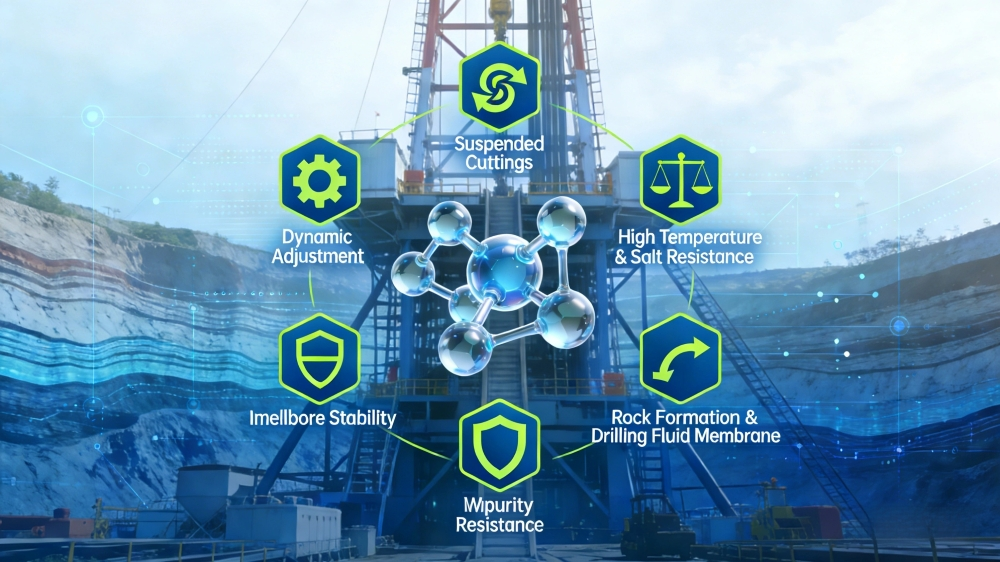
Core Drilling Fluid Types and Their Geologic Fit
Water-based, oil-based, and synthetic-based drilling fluids: performance trade-offs in reactive shales and fractured carbonates
Around 75 percent of all drilling operations worldwide rely on water-based drilling fluids because they cost less money and are easier to dispose of properly according to industry data from 2023. These fluids work pretty well in stable sandstone formations where not many additives are needed for good results. The real problems come when dealing with reactive shale rock though. When clay gets hydrated in these formations, it causes the rock to swell and eventually leads to collapse of the wellbore. That's why special inhibitors need to be added to WBFs when working with such materials. Common solutions include potassium chloride or certain types of glycols which help stop excessive water absorption by keeping the clay structure stable. Field tests show these treatments can cut down swelling issues by roughly half to three quarters in shales that aren't too aggressive.
Oil-based fluids (OBFs) offer superior shale inhibition and lubricity, cutting stuck pipe incidents by up to 40% in fractured carbonates. Their hydrophobic nature prevents water ingress into microfractures and minimizes formation damage. Yet OBFs face tightening environmental regulations and cost 2–3 times more than WBFs.
Synthetic-based fluids (SBFs) bridge this gap: engineered with biodegradable esters, they match OBF performance in shale stabilization and thermal resilience while complying with stringent offshore discharge standards. They are the preferred choice for deepwater operations but become less effective in low-temperature formations where viscosity control challenges arise.
| Fluid Type | Optimal Geology | Limiting Geology | Cost Index |
|---|---|---|---|
| Water-based (WBF) | Stable sandstones | Reactive shales | 1.0x |
| Oil-based (OBF) | Fractured carbonates | Environmentally sensitive | 2.5x |
| Synthetic-based (SBF) | Deepwater operations | Low-temperature formations | 1.8x |
Air, mist, and foam systems: when low-density drilling fluids prevent losses in depleted or highly fractured formations
When dealing with formations where fracture gradients drop below 8 psi, which often happens in places like old oil fields, geothermal sites, or granite formations that are already cracked, traditional drilling fluids just don't work well anymore. They cause all sorts of problems downhole. Air drilling solves this issue completely by getting rid of hydrostatic pressure altogether, so operators can safely drill through these super low-pressure areas without worrying about blowouts. For situations where there's still some moisture sensitivity in the cuttings, mist systems come into play. These mix air with special surfactants to handle the wet material while keeping dust levels under control, all without messing up the stability of the hole itself. Foam systems take things even further. With densities sometimes as low as 0.5 pounds per gallon, they cut down on fluid loss by around 70% when working in rocks full of fractures. Operators in the North Sea actually saw something pretty impressive recently. Their foam system managed to recover nearly 98% of the cuttings generated during drilling, but used only about 20% of the water volume that would normally be needed with regular systems. This shows how effective foams really are at reducing formation damage while still doing the job of cleaning out the wellbore properly.
Critical Drilling Fluid Properties for Geomechanical Stability
Density and rheology control: managing ECD and cuttings transport in high-angle and extended-reach wells
Getting the right balance of fluid density and how it flows through the system is really important for keeping things stable underground, especially when drilling at steep angles or going deep into the earth where pressure control matters a lot for maintaining the well structure. The density needs to match what's happening in the rock pores versus what might cause fractures; go too high and we lose circulation, drop too low and fluids start coming back in. When working at these extreme angles, the Equivalent Circulating Density often jumps above safe levels somewhere around 15 to maybe even 20 percent, which means operators need to constantly adjust densities as they work.
The way fluids flow determines how well cuttings get transported out of the hole. When there's not enough viscosity at low shear rates, cuttings tend to build up in those angled parts of the wellbore. This buildup can really mess things up, increasing torque anywhere from 30% to 40% and making differential sticking much more likely. On the flip side, if the gel strength is too high, it creates these annoying surge pressures when making connections downhole. Looking at actual field results shows something interesting though. Wells that have been using customized rheology profiles specifically designed for good shear thinning properties and proper yield points tend to save about a quarter of their non-productive time compared to what happens with regular mud formulations.
Chemical inhibition: potassium, glycol, and silicate systems for stabilizing swelling shales
About 35 percent of all wellbore instability problems come from reactive shales, mainly because they swell and disperse when hydrated. The potassium treatments work against this swelling issue by swapping ions with those smectite clay minerals, which cuts down on water absorption somewhere between half to three quarters. Then there are glycols that create these kind of water repelling surfaces on the shale, and lab experiments show they can reduce permeability by around 60%. For silicate systems, what happens is they actually start to polymerize right there in the formation, creating something like a cement matrix that seals up those tiny fractures. Field tests done recently in the Permian Basin during 2023 showed these new methods led to roughly 40% less stuck pipe problems than what was seen with traditional inhibitor approaches.
Selection hinges on shale mineralogy and structural context: potassium-glycol blends excel in high-smectite formations, while silicate reinforcement is critical in tectonically fractured zones requiring long-term mechanical sealing.
Advanced Fluid Loss Control for Fractured and Unstable Formations
Nanosilica-enhanced LCMs and smart polymers: dynamic filtration control in loss-prone reservoirs
Standard lost circulation materials (LCMs) tend to struggle in complicated fracture systems because their particles just aren't sized right for the job, plus they break down when exposed to heat. The new nanosilica-based LCMs fix this problem by creating strong bonds through electrostatic forces that form tough seals even in tiny cracks. Field tests show these materials cut down on fluid loss by around 70% under conditions similar to actual reservoir environments according to Ponemon's research from last year. What makes them really stand out is how they work alongside temperature-sensitive smart polymers. These polymers change shape depending on where they're placed, swelling up in areas with lots of permeability to stop unwanted flow while staying inactive in other parts of the formation. This combination approach keeps the drilling fluids working properly throughout operations while still maintaining excellent sealing properties.
Field trials confirm that integrating nanosilica hybrids with smart polymers reduces non-productive time by 45% compared to fibrous or mica-based LCMs. As shown in the table below, these advanced materials outperform legacy solutions across key metrics:
| Material Type | Fracture Seal Capacity | Temperature Stability | Formation Damage Risk |
|---|---|---|---|
| Traditional LCMs | ≈ 2mm fractures | Degrades >120°C | High |
| Nanosilica Hybrids | ≈ 5mm fractures | Stable to 200°C | Low |
| Smart Polymers | Adaptive sealing | Self-regulating | Minimal |
Operators now deploy these systems in highly depleted reservoirs where preventing differential sticking—directly tied to fluid loss control—is essential for maintaining wellbore stability. Real-time monitoring enables dynamic nanoparticle dosing, optimizing seal quality while conserving inventory and cost.
Field-Validated Drilling Fluid Design Strategies for Extreme Geology
Drilling fluids that have been tested in the field are absolutely essential when dealing with challenging geological conditions, whether it's working through tectonically stressed overthrust areas or tackling deepwater high-pressure high-temperature reservoirs. Getting good results depends largely on being able to adapt the formulation to match changing downhole conditions while still maintaining the structural integrity of the well over time. Take the Gulf of Mexico for instance where operators saw a significant drop in downtime after switching to silicate-enhanced water-based fluids. These helped seal up problematic swelling clay formations right at the source, cutting lost time operations by around 30%. When it comes to fractured carbonate formations, engineers have developed lost circulation materials that mix different sized calcium carbonate particles with graphite components. Recent industry reports from IADC back in 2023 showed these specialized mixtures managed to plug fractures with impressive success rates approaching 95% effectiveness in actual drilling scenarios.
How well materials handle heat continues to matter a lot in this field. Synthetic fluids made with special clays called organophilic ones stay stable even when temps hit over 400 degrees Fahrenheit. That's way better than regular fluids which start breaking down once they pass about 300 degrees. What we're seeing now across the industry is a move away from generic fluid mixes towards specifically designed products. Each ingredient in these new formulas actually does something specific for the mechanics of the ground itself. Beyond making drilling operations run smoother, these specialized fluids also help keep the well structure intact and protect what's underneath from damage during extraction processes.
FAQs
1. What are the main types of drilling fluids?
Drilling fluids are generally classified into three main types: Water-based fluids (WBF), oil-based fluids (OBF), and synthetic-based fluids (SBF), each designed for specific geological conditions.
2. Why are water-based drilling fluids preferred?
Water-based drilling fluids are preferred due to their lower cost and ease of disposal. They are particularly effective in stable sandstone formations but require special additives for use in reactive shales.
3. What challenges do oil-based fluids face?
While oil-based fluids offer superior shale inhibition and reduce stuck pipe incidents, they are costly and face strict environmental regulations, especially for offshore drilling.
4. How do synthetic-based fluids differ?
Synthetic-based fluids are engineered with biodegradable esters and provide similar performance to oil-based fluids, particularly in deepwater operations, but face challenges in low-temperature environments.
5. What are air, mist, and foam systems used for?
These systems are used in formations with super low fracture gradients to prevent losses. Foam systems particularly are effective at reducing fluid loss and recovering cuttings.
6. How do chemical inhibitors aid drilling operations?
Chemical inhibitors such as potassium, glycol, and silicate systems stabilize swelling shales and reduce water absorption, consequently minimizing wellbore instability issues.
7. What makes nanosilica-enhanced LCMs distinctive?
Nanosilica-enhanced LCMs offer strong seals and improve fluid loss control by employing electrostatic forces alongside temperature-sensitive smart polymers, drastically reducing fluid loss and non-productive time.