Welcome to JiuJiang LANZO New Materials Technology Co., Ltd.


- Home
- Products
- About Us
- Customized Process
- Applications/Solution
- News
- Contact Us
Leave Your Message
Welcome to JiuJiang LANZO New Materials Technology Co., Ltd.
Engineered interfacial chemistries tailored for drilling stability, shale fracture flowback, and matrix stimulation.
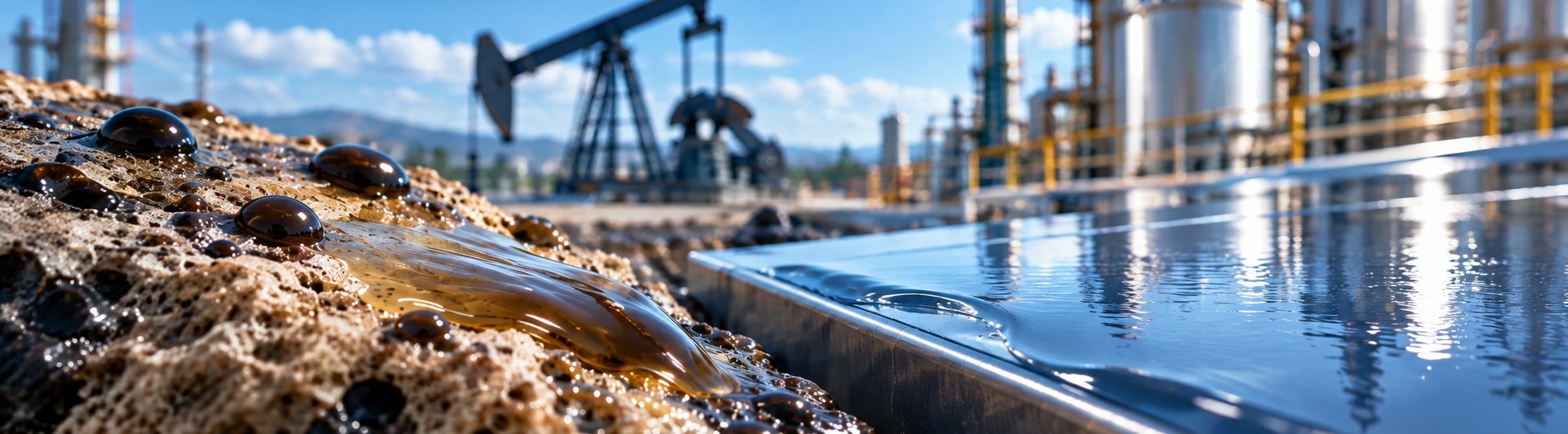
How interfacial chemistry is redefining productivity in unconventional basins, deepwater assets, and brownfield redevelopments.
Global upstream exploration has entered an era defined by extreme geological complexities. Operators are no longer drilling solely into high-permeability, conventional sandstone reservoirs where hydrocarbons flow freely under primary depletion. Today, significant investments target unconventional tight-gas, shale oil plays, deepwater pre-salt carbonates, and mature fields requiring tertiary chemical EOR. In these environments, rock-fluid interactions and interfacial forces govern fluid distribution and production efficiency.
Wetting additives—formulated from sophisticated mixtures of specialized surfactants, co-solvents, and polar functional polymers—act at the fundamental boundary between the solid rock matrix, formation water, injected stimulation fluids, and crude hydrocarbons. By precisely manipulating contact angles, interfacial tension (IFT), and surface charge density, wetting agents unlock hydrocarbons trapped inside nanoscale pore throats that pressure differentials alone cannot mobilize.
Industrial demand for advanced wetting additives is projected to grow substantially over the next decade. Driven by extended lateral drilling programs, multi-stage hydraulic fracturing requiring millions of gallons of slickwater, and rigorous mandates to cut carbon intensity per barrel, modern wetting chemistries must perform under severe bottom-hole temperatures (>180°C), hyper-saline total dissolved solids (TDS > 250,000 ppm), and strict marine/aquatic toxicity regulations.
Lowering capillary forces from 30+ mN/m down to ultra-low micro-ranges allows residual oil droplets to deform, pass through micro-constrictions, and amalgamate into continuous, producible oil banks.
Converting oil-wet or mixed-wet reservoir rock to strongly water-wet shifts the capillary pressure curve, enabling water to spontaneously imbibe into tight matrices and expel bypassed hydrocarbons.
Formulated using specialized polymeric hydrophobes, fluorosurfactant synergies, and amphoteric betaines that remain soluble and chemically active in saturated calcium, magnesium, and sodium brines.
Comprehensive engineering analysis of wetting additives within complex drilling, completion, and reservoir recovery processes.
In high-performance non-aqueous drilling fluids (NADF) and oil-based muds (OBM), maintaining a resilient water-in-oil invert emulsion is critical for borehole integrity and friction reduction. The primary role of the wetting additive here is twofold: preferentially oil-wet weighting materials such as barite, calcium carbonate, and active drill cuttings, while preserving emulsion stability.
If solids become water-wet due to moisture ingress or thermal breakdown of primary emulsifiers, severe operational failures emerge: barite sag, erratic rheological spikes, fluid loss through the filter cake, and dangerous differential sticking. High-performance oil-wetting additives ensure that solids remain dispersed within the continuous oil phase, preventing particle agglomeration, decreasing plastic viscosity, and establishing a low-permeability, slick filter cake against porous reservoir rock.
In multi-stage horizontal fracturing within tight shales (Eagle Ford, Permian, Bakken, Sichuan Basin), operators face low recovery of injected slickwater (often less than 20% to 30%). Much of this aqueous fluid remains trapped in capillary pore networks, creating a damaging phenomenon known as "phase trapping" or "water blocking", which severely restricts subsequent oil and gas flow.
Incorporating specialized non-emulsifying wetting additives into hydraulic fracturing fluids dramatically reduces the capillary entry pressure of aqueous phases into tight pores. Concurrently, these surfactants alter the rock surface from mixed-wet or weakly oil-wet to water-wet, while inducing counter-current spontaneous imbibition. Microemulsion-based wetting additives reduce surface tension from 72 mN/m to below 25 mN/m, accelerating flowback recovery, expediting hydrocarbon breakthrough, and sustaining initial production (IP) rates.
During matrix acid stimulation in deep carbonate reservoirs, concentrated hydrochloric acid (15% to 28% HCl) dissolves calcite and dolomite to etch conductive wormholes. However, direct contact between raw acid and heavy crude creates unstable asphaltic sludges and tight emulsions. Acid-corrosion-resistant wetting additives disperse protective films, prevent iron-induced sludging, accelerate spent acid cleanout, and ensure the rock faces are rendered water-wet to promote immediate hydrocarbon inflow.
In tertiary recovery projects, continuous waterflooding leaves behind capillary-trapped residual oil saturation (Sorw) up to 35-50%. Surfactant-polymer (SP) or alkaline-surfactant-polymer (ASP) flooding utilizes tailored wetting additives that achieve ultra-low interfacial tension (
JiuJiang LANZO New Materials Technology Co., Ltd. is a dynamic and innovative chemical enterprise established in 2019 and strategically located in Jiujiang City, Jiangxi Province, China – a region well-connected to major transportation networks for efficient global logistics. We specialize in the research, development, production, and sales of high-performance chemical additives, serving a diverse range of industries including oilfield exploration, water treatment, petrochemical refining, industrial manufacturing, and coatings production.
Our product portfolio encompasses oilfield chemical additives, water treatment agents, refining and fuel additives, industrial processing aids, coating auxiliaries, and advanced new materials. Beyond our standard offerings, we pride ourselves on our ability to deliver fully customized product development solutions, tailoring chemical formulations to meet the unique specifications and performance requirements of each individual client.
Our operations and business center is headquartered in Jiujiang, Jiangxi Province. From this strategic hub, we coordinate global supply chain management, order fulfillment, and technical support across our four core businesses—oilfield chemicals, water treatment, fuel, and industrial coatings. With convenient access to major transportation networks, we ensure efficient, reliable delivery to customers worldwide.
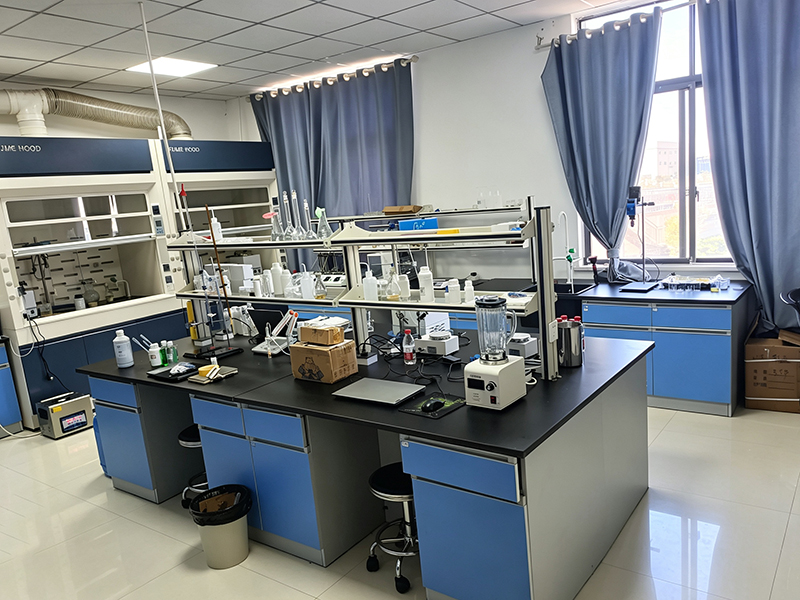
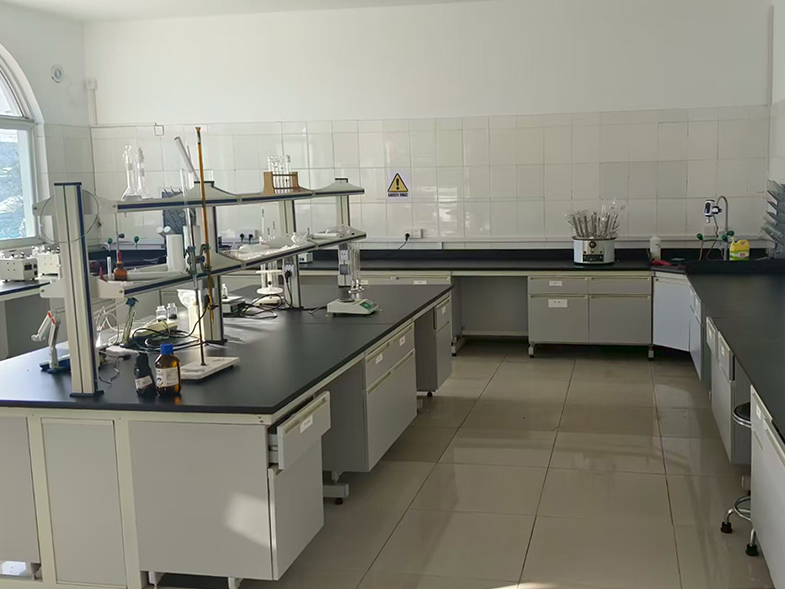
Our R&D and quality control laboratories are located in Jiangxi and Shandong provinces. Equipped with advanced testing instruments and staffed by experienced technical teams, our labs are capable of formulating and custom-developing products to meet diverse customer requirements. From raw material evaluation to finished product performance verification, every stage of laboratory testing and analysis is carried out with scientific rigor and precision.
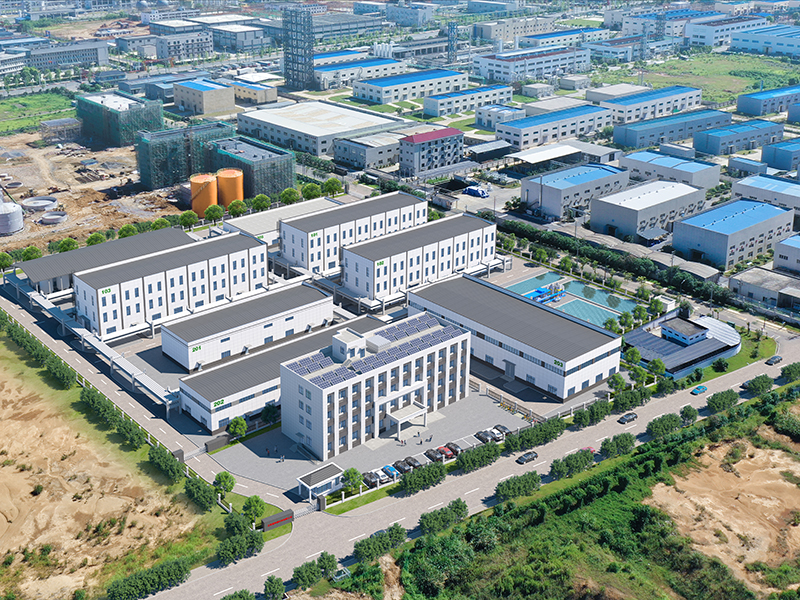
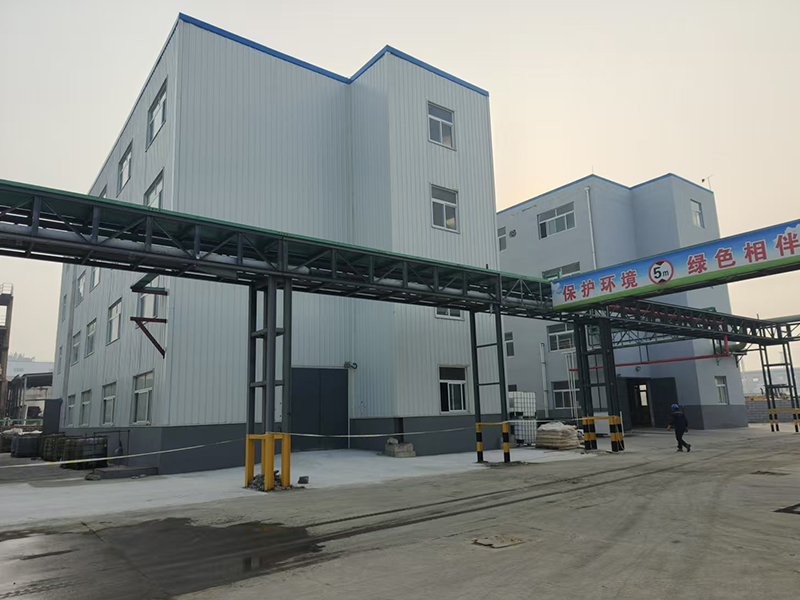
Our manufacturing facilities are located in Jiangxi and Shandong provinces, serving as our primary production centers. The Jiangxi plant is a brand-new facility equipped with state-of-the-art production lines and advanced manufacturing technologies, while our Shandong plant provides robust production capacity with years of operational excellence. Operated by skilled manufacturing teams and adhering to strict quality management systems, our factories ensure efficient, stable, and scalable production that meets both domestic and international standards.
Innovations transforming oilfield interfacial chemistry toward environmental stewardship and extreme performance.
With tightening environmental criteria across North Sea offshore operations (OSPAR convention), North America, and the Middle East, historical fluorinated surfactants and persistent alkylphenol ethoxylates (APEOs) are being phased out. The industry is accelerating the deployment of renewable bio-surfactants, alkyl polyglucosides (APGs), amino-acid derivatives, and modified biosurfactant blends (such as rhamnolipids and sophorolipids).
These next-generation wetting additives demonstrate rapid aerobic and anaerobic biodegradability, non-bioaccumulative properties, and negligible aquatic toxicity. Remarkably, modern molecular design enables these green surfactants to maintain equal or superior surface tension reduction and thermal resilience compared to conventional petroleum-derived chemicals, operating reliably even under HPHT reservoir conditions exceeding 160°C.
Simultaneously, nanotechnology is converging with interfacial science. Silica nanoparticles functionalized with hydrophilic or amphiphilic polymer chains are blended with wetting agents. These "nano-fluid wetting systems" create structural disjoining pressure at three-phase contact lines, systematically stripping sticky crude films off mineral surfaces with unmatched velocity and microscopic sweep efficiency.
Explore our comprehensive portfolio of high-efficiency wetting agents and interfacial modifiers engineered for global energy exploration.


