Welcome to JiuJiang LANZO New Materials Technology Co., Ltd.


- Home
- Products
- About Us
- Customized Process
- Applications/Solution
- News
- Contact Us
Leave Your Message
Welcome to JiuJiang LANZO New Materials Technology Co., Ltd.
Targeted surface passivation chemistries designed to protect heat transfer coils, RO membrane arrays, and demineralized water distribution networks against corrosive breakdown.
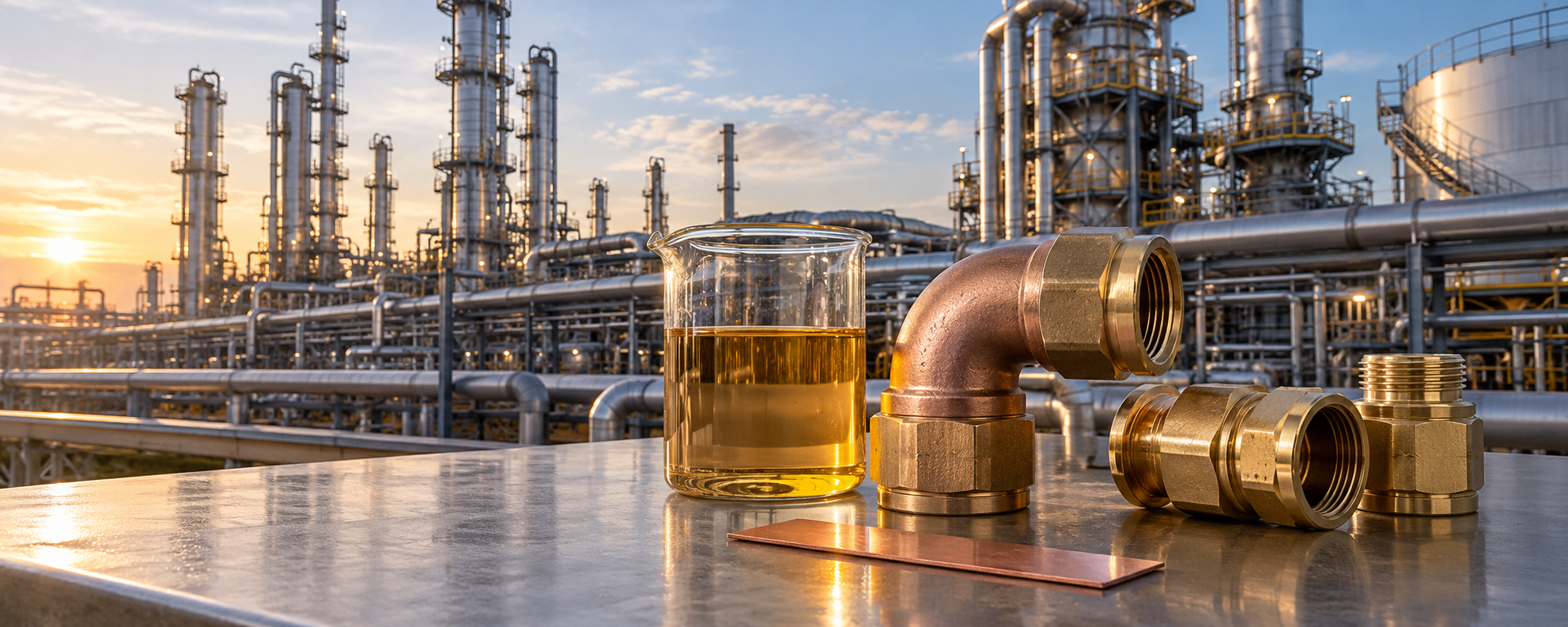
Ultra-pure azole-based surface passivator forming impermeable monomolecular barriers over copper, brass, and bronze metallurgy across high-purity water circuits.
Specialized pickling and acid-wash inhibitor protecting metallic components from aggressive mineral and organic acid attack during descaling operations.
Advanced anti-swelling polymer compound that stabilizes colloidal silicate particulates, preventing silt compaction in clarification and multimedia filter beds.
Synergistic multi-azole formulation delivering anodic and cathodic inhibition for closed chilled water loops and boiler feed condensate recovery trains.
While copper alloys deliver unmatched thermal conductivity and bactericidal properties, untreated process waters subject these systems to severe degradation mechanisms.
In modern water purification facilities—spanning industrial reverse osmosis (RO), continuous electrodeionization (EDI), nanofiltration (NF), and thermal multi-effect distillation (MED)—copper and its alloys (such as brass, bronze, and cupronickel) represent fundamental metallurgy. They are extensively deployed across high-duty heat exchangers, evaporative chiller bundles, pump impellers, valves, and precision instrumentation conduits due to superior thermal heat transfer and natural antimicrobial action.
However, pure, demineralized, and partially desalinated water exhibits an aggressive chemical appetite. Lacking buffering bicarbonate hardness, low-conductivity water easily dissolves passivating cuprous oxide (Cu₂O) films. When dissolved oxygen, aggressive anions (chlorides, sulfates), or residual oxidizing biocides (chlorine dioxide, hypochlorite, peracetic acid) are introduced, accelerated pitting corrosion, stress corrosion cracking (SCC), and uniform surface degradation occur.
Different purification architectures pose distinct electrochemical hazards. LANZO copper corrosion inhibitors are tailored to neutralize corrosion drivers across varying operational chemistries.
Reverse osmosis feeds frequently experience dissolved oxygen saturation, fluctuating redox potential, and elevated chloride levels. Conventional film formers foul delicate spiral-wound elements. Our copper corrosion inhibitors build ultra-thin polymeric monolayers that do not precipitate on polyamide membranes, ensuring uninterrupted permeate flux while halting copper detachment from pre-treatment heat exchangers.
In sub-nanometer microelectronics fabrication, water purity must achieve sub-ppb ionic concentration. Corrosion inhibitors utilized in loop coolers and secondary polishing heat exchangers must exhibit exceptional bonding stability with virtually zero organic leaching, suppressing trace copper migration into deionization polishers and avoiding TOC spikes.
Under elevated temperatures and volatile pH conditions driven by neutralizing amines, standard triazole chemistries volatilize or decompose into ammonia. Our thermally stabilized copper inhibitors withstand operating pressures up to 12 MPa and temperatures reaching 250°C, providing continuous passivating film integrity along condensate return lines.
Brine concentration drives total dissolved solids (TDS) beyond 100,000 mg/L, creating an exceptionally aggressive, chloride-dense slurry within falling-film evaporator tubes. LANZO proprietary copper inhibitors maintain cohesive adsorption even under severe shear stress and hyper-saline conditions, mitigating catastrophic under-deposit corrosion.
Transitioning from empirical chemical blending to predictive molecular design, LANZO leverages quantum-mechanical modeling to engineer robust chemical barriers.
Heterocyclic nitrogen atoms donate electron pairs to unoccupied d-orbitals of cuprous ions (Cu⁺), producing an insoluble, cross-linked [Cu(I)-Azole]n polymeric network across the metal substrate. This barrier physically blocks oxygen diffusion and electron transfer.
By calculating highest occupied molecular orbital (HOMO) and lowest unoccupied molecular orbital (LUMO) energy gaps via density functional theory (DFT), our R&D algorithms predict adsorption energy on Cu(111) surfaces, maximizing chemical binding while eliminating by-product toxicity.
Standard triazoles degrade rapidly when exposed to continuous chlorination, decomposing into chloramines and releasing copper into the stream. LANZO halogen-resistant inhibitors preserve protective surface films even in the presence of 1.0–3.0 mg/L free residual chlorine.
| Parameter / Property | High-Purity RO Grade | Industrial Boiler & Condensate | Hyper-Saline ZLD Grade | Standard Closed Loop |
|---|---|---|---|---|
| Active Chemical Base | Modified Triazole Copolymer | High-Temp Substituted Azole | Polyaromatic Azole Complex | Tolyltriazole (TTA) Sodium Salt |
| Recommended Dosage (ppm) | 1.5 – 5.0 | 5.0 – 15.0 | 15.0 – 35.0 | 3.0 – 8.0 |
| Operating pH Range | 6.0 – 9.5 | 7.5 – 11.0 | 5.5 – 10.5 | 6.5 – 9.0 |
| Thermal Ceiling (°C) | 110°C | 250°C | 180°C | 90°C |
| Free Halogen Tolerance | Up to 1.5 ppm Cl₂ | Up to 2.5 ppm Cl₂ | Up to 3.0 ppm Cl₂ | < 0.5 ppm Cl₂ |
| Membrane Compatibility | 100% Certified Polyamide Safe | Pre-Treatment Only | Compatible with DTRO/Evap | Indirect Contact Only |
The chemical water treatment market is pivoting decisively toward environmental sustainability and digital closed-loop control. Traditional non-biodegradable benzotriazoles face increasing discharge scrutiny across European and North American industrial hubs due to aquatic persistence.
1. Bio-Derived Green Corrosion Inhibitors: Lanzochem is actively pioneering amino-acid-based, imidazole-derived, and plant-extract functionalized molecules that offer over 95% corrosion inhibition efficiency while achieving rapid OECD 301B ready biodegradability.
2. Fluorophore-Tagged Smart Formulations: Modern purification systems integrate PTSA-tagged inhibitors linked to automated fluorometers. When the inhibitor molecule binds to copper, fluorescence signals adjust dynamically, enabling automated dosage adjustments down to parts-per-billion precision without human error.
3. Multimetallic Synergy: Today's equipment relies on titanium, duplex stainless steel, and copper within the same hydraulic circuit. Advanced inhibitors incorporate dual-action surface modulators that inhibit copper corrosion while preventing cathodic hydrogen embrittlement on adjoining alloys.
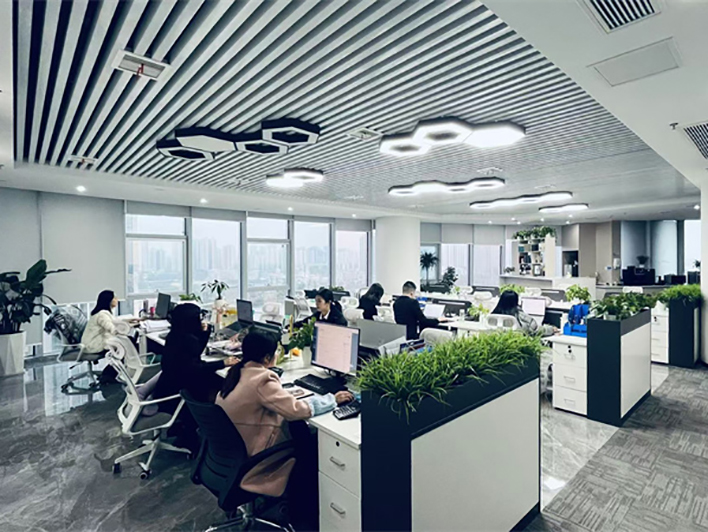
JiuJiang LANZO New Materials Technology Co., Ltd. is a dynamic and innovative chemical enterprise established in 2019 and strategically located in Jiujiang City, Jiangxi Province, China – a region well-connected to major transportation networks for efficient global logistics. We specialize in the research, development, production, and sales of high-performance chemical additives, serving a diverse range of industries including oilfield exploration, water treatment, petrochemical refining, industrial manufacturing, and coatings production.
Our product portfolio encompasses oilfield chemical additives, water treatment agents, refining and fuel additives, industrial processing aids, coating auxiliaries, and advanced new materials. Beyond our standard offerings, we pride ourselves on our ability to deliver fully customized product development solutions, tailoring chemical formulations to meet the unique specifications and performance requirements of each individual client.
Our operations and business center is headquartered in Jiujiang, Jiangxi Province. From this strategic hub, we coordinate global supply chain management, order fulfillment, and technical support across our four core businesses—oilfield chemicals, water treatment, fuel, and industrial coatings. With convenient access to major transportation networks, we ensure efficient, reliable delivery to customers worldwide.
Through responsive client consultation, rapid sample distribution, and complete technical documentation (including SDS, Certificate of Analysis, and application dosing matrices), LANZO delivers unwavering operational assurance to water treatment facilities across six continents.
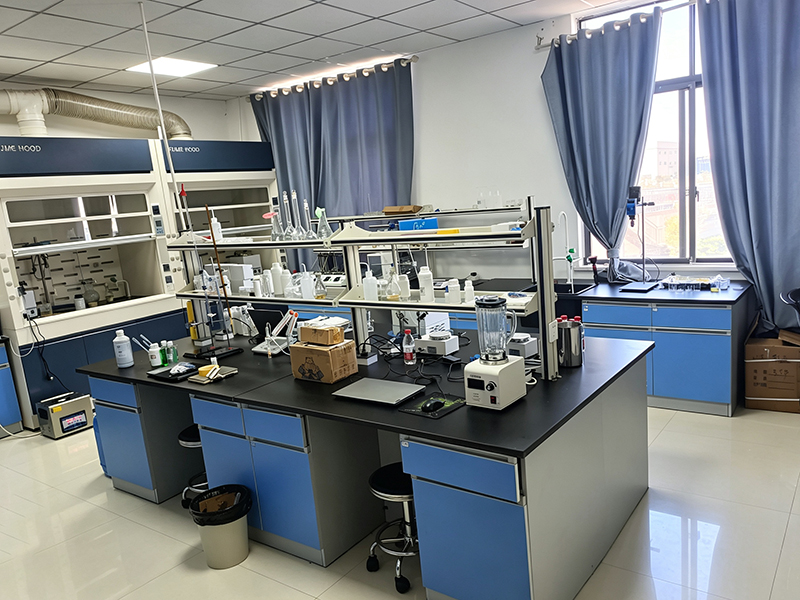
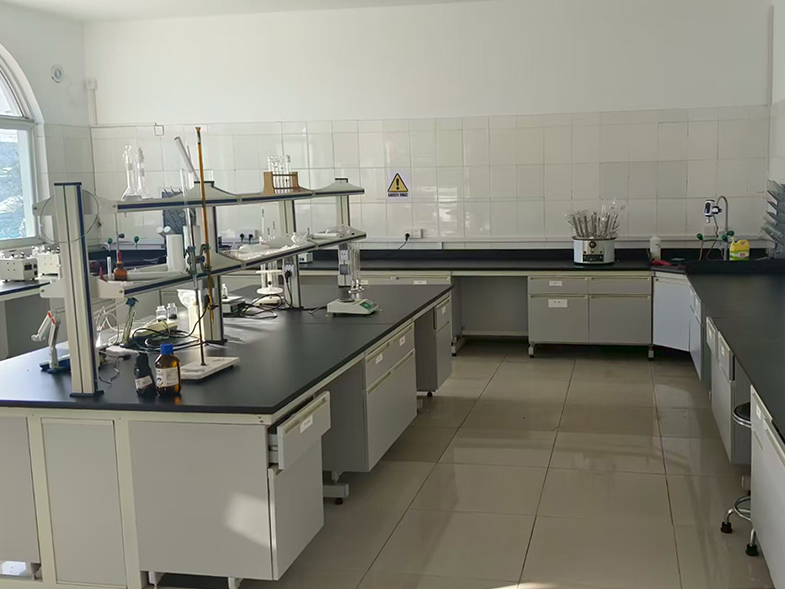
Our R&D and quality control laboratories are located in Jiangxi and Shandong provinces. Equipped with advanced testing instruments and staffed by experienced technical teams, our labs are capable of formulating and custom-developing products to meet diverse customer requirements. From raw material evaluation to finished product performance verification, every stage of laboratory testing and analysis is carried out with scientific rigor and precision.
Our analytical infrastructure incorporates potentiodynamic polarization workstations, Electrochemical Impedance Spectroscopy (EIS), rotating cylinder electrode (RCE) units for turbulent shear testing, and ICP-MS for sub-ppb copper ion quantification in purification effluents.
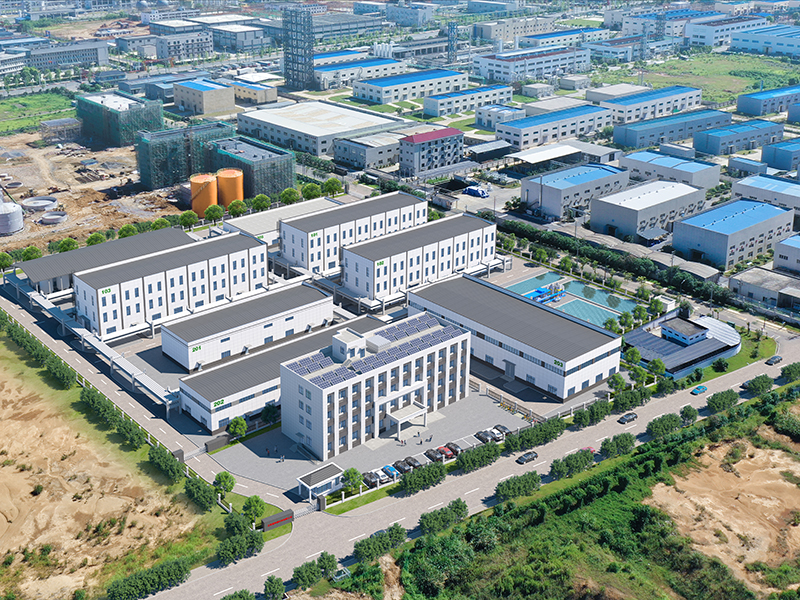
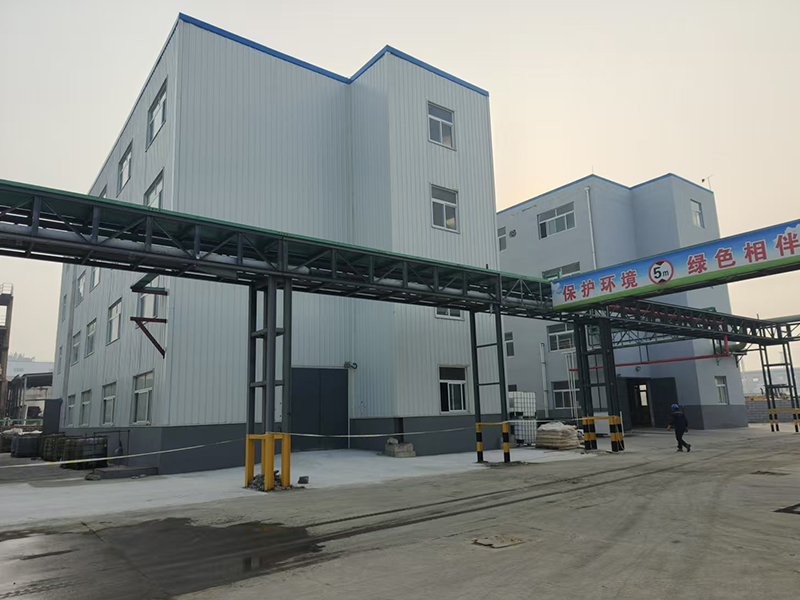
Our manufacturing facilities are located in Jiangxi and Shandong provinces, serving as our primary production centers. The Jiangxi plant is a brand-new facility equipped with state-of-the-art production lines and advanced manufacturing technologies, while our Shandong plant provides robust production capacity with years of operational excellence. Operated by skilled manufacturing teams and adhering to strict quality management systems, our factories ensure efficient, stable, and scalable production that meets both domestic and international standards.
With continuous-flow synthesis reactors, automated packing lines, zero-emission environmental scrubbers, and an annual capacity reaching tens of thousands of metric tons, we provide rock-solid supply continuity for mission-critical municipal and industrial utilities.
Browse our complete spectrum of corrosion control and performance chemical agents, engineered for exceptional reliability under the most demanding industrial water conditions.
Surface-passivating azole formulation halting pitting and cuprous dissolution in reverse osmosis and industrial water loops.
High-temperature acid pickling protector preventing metal attack during membrane cleaning and scale descaling runs.
High-efficiency anti-swelling agent preventing clay dispersion and particle carryover in raw water intake filtration.
Ultra-low molecular weight passivator guaranteed non-fouling to thin-film composite reverse osmosis elements.
Organic acid inhibitor formulated for citric, sulfamic, and EDTA chemical clean-in-place (CIP) operations.
Cationic polymer stabilizer for sand filters and multimedia pre-treatment, arresting silt bed channeling.
Engineered for boiler steam-condensate circuits up to 250°C, preventing cuprous redeposition on economizers.
Industrial strength corrosion inhibitor suppressing base metal erosion during aggressive 5-15% HCl washes.


