Welcome to JiuJiang LANZO New Materials Technology Co., Ltd.
When you're picking an H2S scavenger supplier, it's not just about price — it's a process decision. Honestly, performance can shift depending on the fluid composition, temperature, contact time, and all those operating conditions. So a sample that does great in a lab bottle? It might not hold up the same way in a live stream. Honestly, the little things can make or break a batch. Like where you're injecting, how well you mix, what you need for storage, and whether the supplier’s technical data actually tells you what you need.
So, if you're looking at suppliers, this guide walks you through ten China-based manufacturers worth a closer look. It's all about practical stuff—like, what applications does each company actually focus on? Can their team break down the product chemistry and walk you through recommended dosages? Do they share test data, handling guidance, and actually respond when you need technical support? The idea is to compare evidence, not just take broad claims at face value. And sure, a low unit price might catch your eye, but the real cost per treatment depends on how much product you're using and what the field results actually show.
One thing I should flag here: I couldn't verify that quoted H2S scavenger expert because no source material was provided, and I'm not going to invent something just to fill the gap. That kind of thing really matters for trust, you know? So treat this list as a starting point, then go straight to each manufacturer and ask for their current specs and application references. Honestly, some of the info might still be a pain to compare side by side. But it's worth keeping in mind. If you take the time to shortlist carefully, and then test things out under conditions that actually reflect real use, you'll be in a much better position to pick the right one.
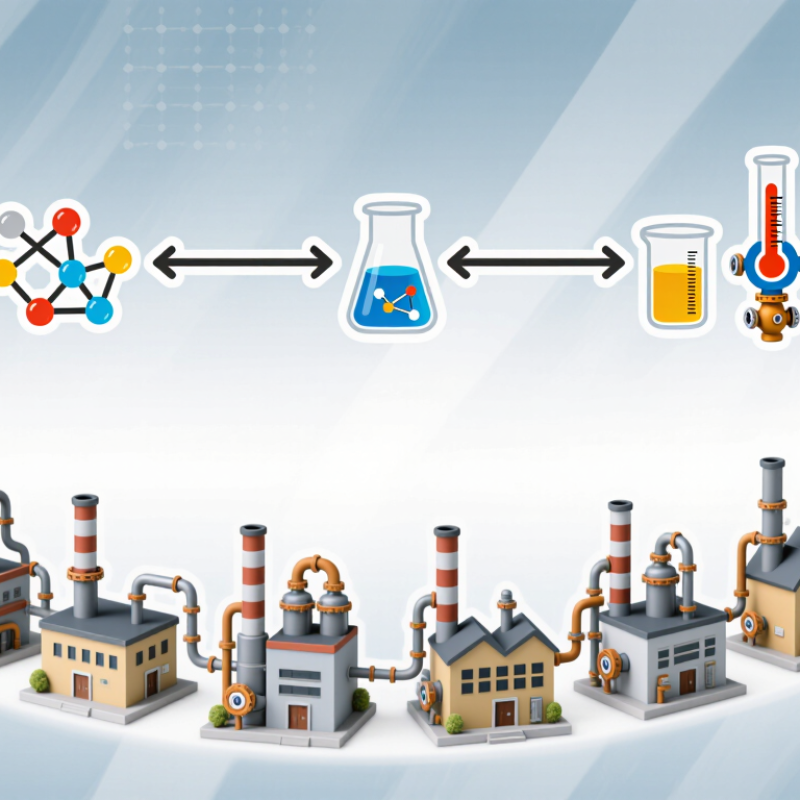
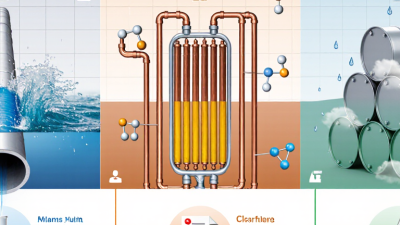
Hydrogen sulfide can corrode equipment, create unpleasant odors, and pose serious exposure risks. H2S scavengers react with or bind the gas, reducing its concentration in process fluids or gas streams. Their performance depends on chemistry, temperature, contact time, and the fluid’s composition. Small details matter.
In oil and gas production, scavengers may be injected into well fluids, pipelines, or treatment systems. Water treatment and industrial processing can also use them where sulfide control is needed. A liquid scavenger may suit continuous dosing, while a solid media bed can provide fixed-point treatment. Neither option works equally well everywhere. Poor mixing, changing flow rates, or competing chemicals can reduce removal and increase operating costs.
Choosing a treatment starts with representative H2S measurements and a clear process target. Operators should check residual sulfide, corrosion indicators, and chemical consumption over time. A jar test can help, but it is not a final answer; field conditions often differ. H2S Removal plans should also consider handling, storage, spent media, and downstream effects. Results need monitoring, not assumptions.
Hydrogen sulfide scavengers remove H2S by reacting with it or capturing it on a solid surface. In liquid streams, a scavenger mixes with dissolved H2S and converts it into less volatile sulfur-containing compounds. In gas treatment, a packed bed may use reactive media, such as iron oxide. H2S contacts the media and forms solid sulfides. The chemistry depends on the product and process conditions.
Contact matters. Poor mixing can leave untreated pockets, even when the dose looks sufficient. Operators typically consider H2S concentration, flow rate, temperature, pH, and available reaction time. A field example is a sample point after the treatment vessel: comparing inlet and outlet readings shows whether removal is holding as flow changes. Spent media also needs attention. Its capacity declines as reactive sites are used.
The calculation is not always neat. Real streams contain other compounds that may compete for the scavenger, so laboratory testing can help estimate demand before full-scale use. Routine monitoring then checks performance under actual operating conditions. Small details count. A sudden rise in outlet H2S may signal exhausted media, uneven flow, or a dosing change—not necessarily a failed chemical reaction.
China’s H2S scavenger manufacturing landscape includes established chemical producers and specialized treatment suppliers. Capacity alone tells little. Buyers often compare active content, dissolution behavior, storage stability, and performance under changing water conditions. A sample test matters. In field use, a scavenger may meet its target in a clean laboratory blend but react differently with iron, brine, or changing pH. That gap deserves attention.
Manufacturers serve oil and gas operations, wastewater treatment, and other industrial processes. Products may be designed for liquid-phase or gas-phase treatment. Some formulations aim for rapid H2S reduction; others emphasize lower chemical demand or easier handling. Oxygen Scavenger products address a different treatment need, so buyers should not treat the two functions as interchangeable. Ask for current technical data, recommended dosage ranges, compatibility notes, and residual-monitoring guidance. Small details count. Packaging, transit time, and temperature exposure can affect product condition before delivery. China’s supplier base is broad, but documentation and application support may vary. A cautious trial under representative site conditions is more useful than a confident claim. I would still verify results over multiple operating cycles.
Choosing an H2S scavenger manufacturer requires more than comparing prices. Review product data for active content, recommended dosage, reaction time, and performance across expected temperatures. Ask whether tests reflect your water, gas, or oil conditions; a clean laboratory sample may not match a field stream containing salts or solids. For sour-service applications, request clear guidance on sampling and monitoring residual H2S. A mercaptan scavenger may address different compounds, so confirm the product’s intended use rather than assuming one treatment fits all.
Manufacturing consistency matters. Check whether the supplier documents batch testing, raw-material controls, and product shelf life. Practical support is also revealing: can its technical team help interpret a jar test or troubleshoot foaming at a specific operating temperature? Ask for handling instructions, compatible materials, and packaging suited to your storage setup. Small details count. A drum label that is hard to read can create avoidable confusion. No checklist is perfect; I would still verify performance with a controlled field trial before making a broad change.
Tips: Compare data from similar operating conditions, not just headline removal rates. Keep dosage, contact time, temperature, and measured H2S in your trial notes. Look for specific answers, not general promises.
A useful review of ten Chinese H2S scavenger manufacturers should compare capabilities, not imply an audited ranking. The profiles can cover suppliers focused on water-soluble products, oil-soluble formulations, continuous injection, batch treatment, high-temperature service, low-temperature performance, solid media, corrosion-conscious chemistry, custom blending, and field testing. Buyers should request application data for each product, including dosage, contact time, residual sulfide, and compatibility with process fluids. Small-bottle tests help. Lab results, however, may not predict field performance exactly.
The World Bank’s Global Gas Flaring Tracker Report 2024 estimated that 151 billion cubic metres of gas were flared worldwide in 2023. This is not a direct measure of scavenger demand, but it illustrates the scale of gas-handling operations where sour-gas control may matter. Compare manufacturers’ test methods and ask whether results reflect the buyer’s temperature, water cut, and flow conditions. One weakness in many supplier comparisons is thin disclosure: a broad “high efficiency” claim is not a substitute for reproducible data. Review safety documentation, quality controls, and technical support alongside price.
When comparing ten H2S scavenger manufacturers, start with chemistry and operating conditions, not catalogue claims. Water-soluble products suit many aqueous streams; oil-soluble and triazine-based options may fit different fluids and contact times. Ask for dosage guidance tied to inlet H2S, temperature, pH, salinity, and residence time. A clear jar test helps, but it cannot replace a controlled field trial.
The IEA’s Oil 2024 report projects global oil demand at about 105.6 million barrels per day by 2030. That forecast is not a scavenger-market estimate, but it underlines the continuing need for reliable treatment across production and processing. Compare each supplier’s test methods, batch traceability, safety data sheets, and technical response times. Small details matter. ISO 9001 or ISO 14001 certification can indicate management systems; neither proves chemical performance. Likewise, ISO 15156/NACE MR0175 addresses material resistance in H2S-containing environments, not scavenger approval.
Good technical support should include compatibility checks, residual-H2S monitoring advice, and help adjusting dosage when water cut or flow changes. Ask whether field staff can review sampling points and explain unexpected results. I would not treat a polished data sheet as proof: actual fluids can behave differently, and one trial may miss seasonal variation. Record the test conditions and compare results on the same basis.
Buyer-screening guide: The ten entries below are anonymized product-category slots, not verified company rankings or claims about specific manufacturers. Confirm each supplier’s actual portfolio, current certificates, and support capabilities directly.
| Supplier Slot | Product Type to Compare | Common Product Form | Potential Application Fit | Certifications and Documents to Verify | Technical Support to Confirm |
|---|---|---|---|---|---|
| Supplier 01 | Triazine-based liquid scavenger | Aqueous or solvent-based liquid; formulation varies | Gas treating or production systems where liquid injection and adequate contact time are available | Current ISO 9001 certificate and scope, SDS, product specification, COA, and applicable transport documentation | Jar testing, dosage guidance, compatibility review, and field-trial support |
| Supplier 02 | Non-triazine liquid scavenger | Liquid formulation; active chemistry should be disclosed by the supplier | Projects evaluating alternatives to triazine; performance depends on gas composition and operating conditions | SDS, active-content specification, COA, relevant regulatory declarations, and current quality-system certificate | Comparative testing against the incumbent chemical, by-product review, and operating-window recommendations |
| Supplier 03 | Glyoxal-based scavenger | Typically supplied as a liquid solution | Selected liquid or gas-treatment duties; confirm suitability through application-specific testing | SDS, concentration range, COA, handling instructions, and applicable market-specific chemical declarations | Bench testing, handling guidance, and assessment of reaction products and downstream compatibility |
| Supplier 04 | Iron-oxide solid scavenger media | Granules or other packed-bed media | Fixed-bed treatment where the stream and process design are suitable for solid media | Media specification, SDS, COA, particle-size data, pressure-drop guidance, and waste-disposal information | Bed sizing, changeout criteria, breakthrough monitoring guidance, and spent-media handling advice |
| Supplier 05 | Iron-based composite or impregnated media | Pellets, granules, or shaped adsorbent | Gas polishing or fixed-bed service, subject to humidity, temperature, and contaminant limits | Composition disclosure where available, SDS, COA, operating limits, and batch consistency data | Feed-condition review, pilot-test recommendations, and spent-media management guidance |
| Supplier 06 | Metal-oxide-based solid scavenger | Pelletized or granular media | Fixed-bed applications selected for the target gas composition and required outlet specification | SDS, media properties, capacity test method, COA, and applicable waste classification information | Capacity estimation, process-condition screening, and bed-life monitoring recommendations |
| Supplier 07 | Impregnated activated-carbon media | Granular carbon or shaped carbon media | Low-concentration polishing duties where moisture and competing contaminants are considered | SDS, impregnant and media specifications, COA, fire-safety information, and disposal guidance | Humidity and co-contaminant assessment, vessel loading guidance, and replacement criteria |
| Supplier 08 | Water-soluble liquid scavenger | Concentrated or ready-to-use liquid; solubility and dilution requirements vary | Systems that can accommodate aqueous chemical injection and manage the resulting liquid phase | SDS, solubility and concentration data, COA, storage requirements, and compatibility documentation | Mixing and injection guidance, water-quality review, and compatibility testing with production chemicals |
| Supplier 09 | Oil-dispersible or hydrocarbon-compatible liquid scavenger | Liquid concentrate or formulated blend | Selected hydrocarbon-phase treatment duties; verify partitioning and product-quality impacts | SDS, phase-compatibility data, product specification, COA, and applicable transport documents | Partitioning tests, crude or condensate compatibility checks, and dosage optimization |
| Supplier 10 | Application-specific blended scavenger | Liquid blend or solid media, depending on the disclosed formulation | Tailored service where a standard chemistry requires adjustment for process conditions | Full SDS, declared product specification, COA, change-control information, and current certificates relevant to the supplied product | Documented test plan, performance data for representative conditions, scale-up support, and post-trial review |
When comparing H2S scavenger suppliers, ask for performance data under conditions close to your own: gas composition, pressure, temperature, water content, and expected H2S loading. A polished brochure is not enough. Request test methods, repeatability results, recommended dosage ranges, and evidence of how the product behaves when operating conditions change.
Small details matter. A supplier should also explain likely byproducts, materials compatibility, handling requirements, and what measurements confirm treatment performance. Ask for a sample trial plan before committing to a full-scale installation.
Safety claims need careful review. The NIOSH Pocket Guide to Chemical Hazards lists a 10 ppm, 10-minute recommended exposure ceiling for hydrogen sulfide and an IDLH level of 100 ppm. These figures are not process-design limits, but they show why measurement, alarms, and clear operating procedures matter.
For an H2S Removal System, qualify the supplier’s technical support as well as its chemistry: check response times, troubleshooting records, batch quality controls, and whether staff can interpret site data.
One awkward point: a successful laboratory test may not predict field performance. Ask how the supplier will investigate a missed target, and agree on acceptance criteria before the trial begins.
They react with dissolved H2S or capture it on solid media. Liquid treatments form less volatile sulfur-containing compounds. Packed beds can form solid sulfides. The exact chemistry varies.
Poor mixing can leave untreated pockets, even when the dose seems sufficient. Check inlet and outlet readings. Small gaps matter.
H2S concentration, flow rate, temperature, pH, and reaction time all matter. Water content and other compounds may also change demand.
Compare readings before and after the treatment vessel. Repeat checks as flow changes. One reading is not the whole story.
Its capacity declines as reactive sites are used. A rise in outlet H2S may point to spent media or uneven flow. It may also reflect a dosing change.
Other compounds in a real stream can compete for scavenger. Testing can help estimate demand, but field results may differ. That gap deserves attention.
Request performance data for similar gas composition, pressure, temperature, water content, and H2S loading. Ask for test methods, repeatability results, and dosage ranges. Brochures alone are thin evidence.
Agree on a trial plan and acceptance criteria before starting. Confirm how staff will interpret site readings and investigate missed targets. A lab success may not hold in the field.
This article introduces the role of H2S Scavenger products in industrial processes, explaining how they help reduce hydrogen sulfide through different reaction and removal mechanisms. It also explores China’s manufacturing landscape and outlines the factors buyers can use to assess suppliers, including product performance, application suitability, quality systems, certifications, technical expertise, and after-sales support.
The article profiles ten Chinese manufacturers without focusing on brand promotion, then compares common product types and the technical services available to buyers. It concludes with practical steps for selecting and qualifying a supplier, such as defining operating requirements, reviewing relevant documentation, evaluating sample performance, and confirming ongoing support. These considerations can help buyers make a well-informed choice for their specific process needs.