Welcome to JiuJiang LANZO New Materials Technology Co., Ltd.


- Home
- Products
- About Us
- Customized Process
- Applications/Solution
- News
- Contact Us
Leave Your Message
Welcome to JiuJiang LANZO New Materials Technology Co., Ltd.
A Chemical Auxiliary Agent is basically a supporting substance that helps improve a product, a process, or some manufacturing step. It might help ingredients spread out, cut down foam, control viscosity, improve wetting, or support curing. Unlike the main active ingredient, it usually does a technical job rather than creating the product's primary effect.
And yes, small changes really do matter. Just a few grams in a mixing tank can shift flow, surface appearance, drying time, or storage stability. In coatings, an auxiliary agent might help pigments spread evenly across a metal panel. In textile processing, it can lead to smoother fabric treatment and more consistent color. Pharma and personal-care makers may use carefully chosen auxiliaries to improve processing, texture, or product uniformity—within whatever rules apply, of course.
The term itself isn't always used the same way, and that ambiguity is worth paying attention to. Experienced formulators check compatibility, dosage, temperature, and processing conditions before giving approval. They also look over safety data sheets, technical specs, impurity profiles, and batch records. Lab testing can catch problems you won't see during initial mixing—like separation after storage or an unexpected odor popping up. Good suppliers should offer traceable documentation and clear handling guidance.
Picking one isn't just about grabbing the strongest additive. It's a balancing act: performance, worker safety, environmental concerns, product quality, and regulatory expectations all come into play. Results can vary with equipment, raw-material lots, and production scale. So practical trials and independent quality checks still matter. A well-chosen Chemical Auxiliary Agent can make production more stable, sure—but it's never a replacement for solid formulation design or responsible manufacturing controls.
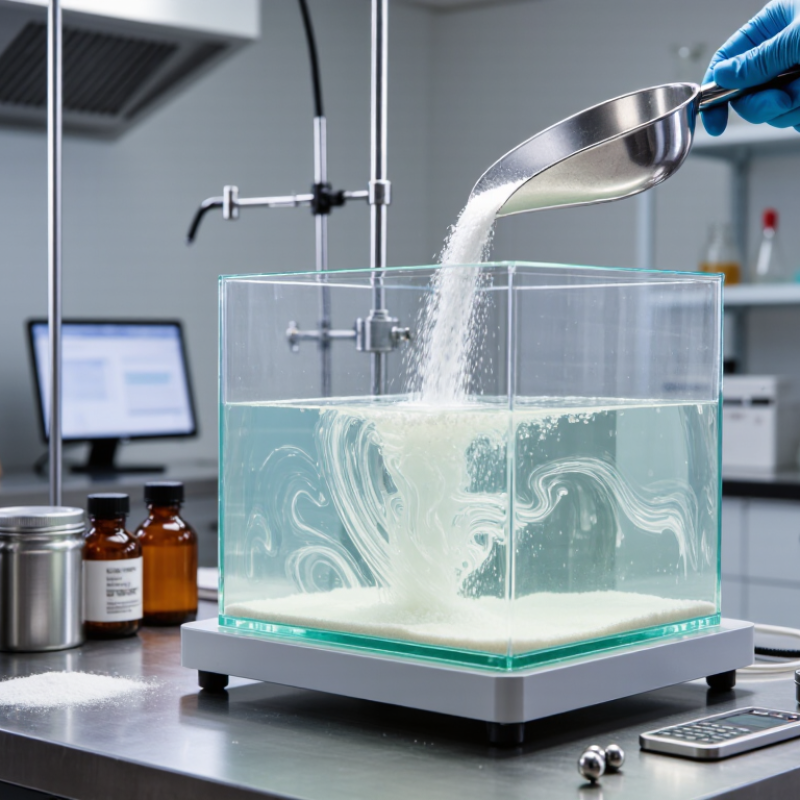
A chemical auxiliary agent is a substance that supports manufacturing without becoming the product’s primary material. It may improve mixing, wetting, foaming control, viscosity, color uniformity, or surface finish. Common examples include surfactants, dispersants, stabilizers, defoamers, and processing aids. Their value is often practical rather than visible. A small dosage can help a coating spread evenly across a metal panel or keep particles suspended in a liquid.
The category is not perfectly fixed. An additive may serve as an auxiliary agent in one process but act as a functional ingredient in another. Its core characteristics are process support, targeted performance, compatibility, and controlled use. Engineers usually assess dosage, temperature stability, residue, worker exposure, waste generation, and interaction with other chemicals. The European Chemicals Agency’s chemical safety guidance emphasizes exposure assessment and lifecycle control, not performance alone. That distinction matters on a factory floor.
Scale makes this issue more important. The United Nations Environment Programme’s Global Chemicals Outlook II reported that global chemical production capacity could double between 2017 and 2030. More production can increase demand for efficient auxiliaries, but it can also enlarge waste and emissions risks. Reliable selection therefore requires batch records, supplier documentation, and measurable test results. Laboratory performance may look excellent. Full-scale performance can differ. This gap deserves more honest review. A useful agent in one formulation may become unnecessary after equipment, temperature, or raw materials change.
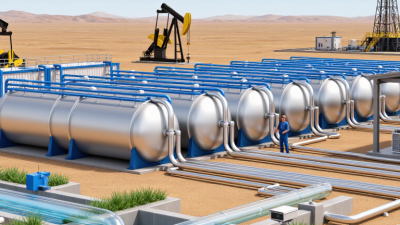
Anti-gas channeling agent solutions are gaining attention in production and operations because uncontrolled gas movement can reduce sweep efficiency, increase gas production, and weaken pressure support. In heterogeneous reservoirs, fractures, high-permeability streaks, and poorly isolated intervals may create preferential flow paths. A properly designed treatment can improve conformance by selectively increasing resistance to gas flow while maintaining a practical level of oil or water mobility. This approach supports more stable production and helps operators manage declining well performance.
Insights associated with SPE Production & Operations discussions emphasize the importance of matching the treatment to reservoir conditions rather than relying on a one-size-fits-all formulation. Key considerations include temperature, pressure, salinity, permeability contrast, fluid compatibility, and the location of the gas channel. Candidate systems may use polymers, gels, foams, or other conformance-control chemistries engineered to reach the target interval, build strength under downhole conditions, and remain stable during extended production. Laboratory testing, core-flood evaluation, and injectivity analysis are essential for estimating placement behavior and treatment durability.
Field execution also requires careful monitoring before and after application. Changes in gas-oil ratio, water production, pressure response, and injectivity can indicate whether the treatment is diverting flow as intended. By combining reservoir diagnostics with controlled chemical design and real-time production surveillance, anti-gas channeling programs can become more predictable, economical, and adaptable to changing operating conditions.
It supports manufacturing without becoming the main product. It may improve mixing, wetting, drying, lubrication, or surface protection. The boundary can be unclear.
Textile production uses wetting agents, softeners, and dyeing auxiliaries. Coatings and adhesives may use dispersants and defoamers. Water treatment uses coagulants and flocculants.
They can support even coloring and smoother fabric. Small process changes may reduce rejected batches, water use, or energy demand. Results vary with equipment and raw materials.
Check compatibility, viscosity, residue, emissions, and wastewater effects. Test under actual temperatures and equipment settings. Laboratory results can mislead.
Not automatically. Workers may still face vapors, dust, splashes, or skin contact. Exposure often occurs during weighing, hose connection, and equipment cleaning.
Review current safety data, labels, ventilation, protective equipment, and task-specific risks. Train workers before transfer and cleaning. Procedures are not perfect.
Review emissions, wastewater toxicity, persistence, bioaccumulation, packaging waste, and accidental releases. Store waste containers securely. Small leaks can reach drains quickly.
No. Breakdown depends on temperature, oxygen, microbes, and treatment time. A replacement may reduce one hazard but increase energy use or create different waste.
Requirements may cover classification, registration, transport, storage, reporting, and disposal. Confirm duties for the country, concentration, workplace, and intended use. Keep documented evidence.
Link the material, batch, task, worker training, and incident response plan. Independent testing can challenge incomplete supplier information. New odors or process changes should trigger review.
A Chemical Auxiliary Agent is a substance added to an industrial formulation or process to improve performance, efficiency, stability, or handling without necessarily becoming the main product. These agents may support functions such as cleaning, dispersing, binding, softening, preserving, foaming control, lubrication, or surface treatment. They can be classified according to their chemical composition, physical form, intended function, or the production stage in which they are used. By modifying reaction conditions, material properties, or processing behavior, chemical auxiliary agents help manufacturers achieve more consistent quality and efficient production.
Chemical auxiliary agents are widely used in textiles, plastics, coatings, construction materials, agriculture, personal care, food processing, and other commercial sectors. Their use can reduce energy consumption, improve product durability, simplify processing, and minimize manufacturing defects. However, responsible selection and application are essential. Manufacturers should evaluate toxicity, worker exposure, environmental persistence, waste handling, storage conditions, and product compatibility. Proper labeling, risk assessment, regulatory compliance, and safer alternatives help ensure that these agents deliver industrial benefits while protecting people and the environment.