Welcome to JiuJiang LANZO New Materials Technology Co., Ltd.


Leave Your Message
0%

Oilfield water treatment isn’t just a disposal headache anymore—it’s becoming a strategic production issue. In 2026, buyers worldwide will expect safer reuse, tighter monitoring, and less chemical use. The International Energy Agency’s World Energy Outlook 2024 expects oil demand to peak before 2030 under stated policies. So mature fields may end up carrying more operational pressure. Water efficiency will matter even more.

The scale is hard to ignore. The International Association of Oil & Gas Producers says that in mature assets, produced water can be several times larger than oil volumes. A widely cited Argonne National Laboratory estimate puts global produced-water generation at around 250 million barrels per day. Exact numbers? They vary by basin and reporting method. That gap is worth a closer look. Before choosing equipment, buyers should ask for site-specific flow data, salinity profiles, oil content, and treatment performance.

David S. Burnett, former Director of the Global Petroleum Research Institute at Texas A&M University, once put it this way: “Produced water is a resource to manage, not a waste to discard.” His view is still practical. A membrane can polish water beautifully—until scaling starts hurting performance. Dissolved gas flotation can remove oil efficiently, sure, but it still needs disciplined chemical control. And real field experience? It often exposes weaknesses that lab tests never show.

This guide looks at 2026 solutions through operating cost, recovery rate, footprint, maintenance, and compliance readiness. It also considers digital monitoring and modular treatment systems. The truth is, no single technology fits every field. That’s the uncomfortable part. Global buyers need evidence—not just impressive brochures.
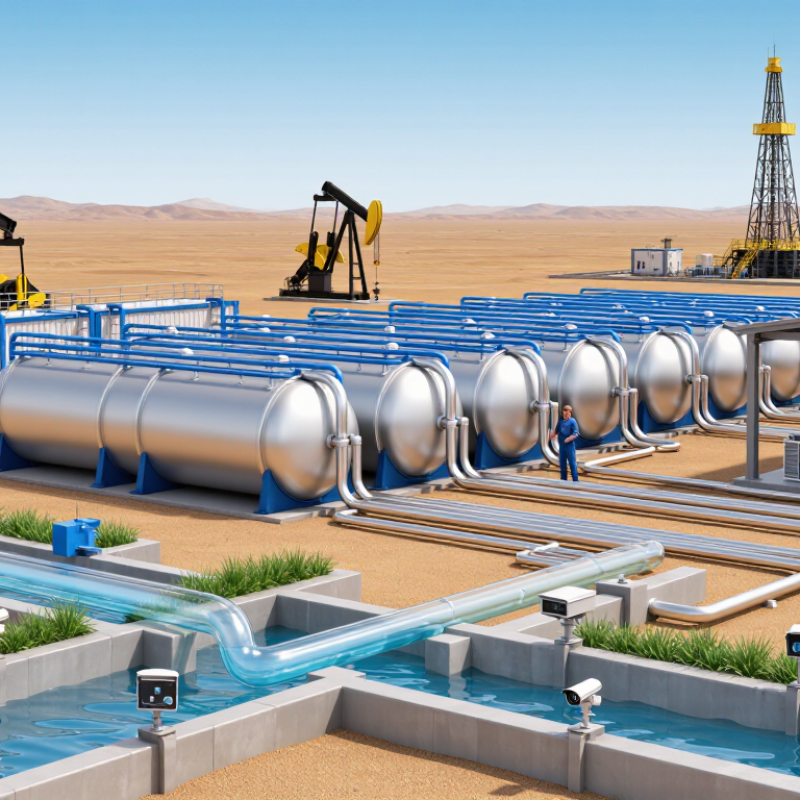
2026 Top Oilfield Water Treatment Solutions Global Buyers Need

Oilfield Water Treatment: Definition, Scope, and Industry Importance

Oilfield water treatment is the controlled management of water produced, injected, or used during drilling and production. It includes separation, filtration, chemical conditioning, disinfection, desalination, reuse, and safe discharge. The scope is wider than wastewater cleaning. It also covers corrosion control, scale prevention, reservoir protection, and reliable water monitoring.

The U.S. Environmental Protection Agency identifies produced water as the largest waste stream from oil and gas operations. Argonne National Laboratory reports that water-to-oil ratios can range from below one to more than ten barrels per barrel of oil. Mature fields usually generate more water. That changes equipment sizing, operating costs, and treatment priorities. The numbers are not perfectly consistent. Field geology, production age, and reporting methods affect each estimate. This is where practical engineering judgment matters. A treatment train should begin with laboratory testing, not a sales promise. Operators commonly monitor oil content, suspended solids, salinity, bacteria, iron, and scaling ions. Poor data can damage membranes and shorten equipment life.

Tips: Request at least several weeks of representative samples. Test during changing production conditions. Define reuse or discharge limits before selecting equipment. Ask suppliers for removal performance under your actual water chemistry. A clear maintenance plan is essential. It is often overlooked. Reference: U.S. EPA technical documents and Argonne National Laboratory produced-water research.

Major Water Sources and Contaminants in Oilfield Operations

Oilfield water rarely comes from one source. Formation water rises with crude oil and often carries concentrated salts. Flowback water returns after hydraulic stimulation, while injected seawater or recycled water enters during pressure maintenance. Operators also manage cooling water, boiler blowdown, wash water, and stormwater around well pads. Each stream behaves differently.

The scale is substantial. An Argonne National Laboratory review estimated global produced-water generation at roughly 250 million barrels per day (Veil, 2015). The International Association of Oil & Gas Producers identifies produced water as a major operational waste stream. Its chemistry can include total dissolved solids, chlorides, bicarbonate, iron, oil, grease, and suspended solids. Some reservoirs also release benzene, toluene, ethylbenzene, and xylenes. These compounds can complicate treatment selection.

Biological contaminants deserve attention too. Sulfate-reducing bacteria may contribute to corrosion and hydrogen sulfide formation. Calcium, barium, and strontium can create hard scale inside pipes and membranes. The U.S. Environmental Protection Agency’s 2019 oil and gas wastewater study noted that wastewater composition varies widely by geology, production method, and chemical use. That variability makes generic treatment packages risky. A laboratory sample can look clean after settling, yet field water may foul equipment within days. Sampling frequency is often insufficient. Buyers should question averages, test seasonal changes, and match treatment to the actual water source, not only the oilfield name.

Core Technologies for Oilfield Water Treatment in 2026

In 2026, oilfield water treatment depends on matching technology to water chemistry. Produced water may carry oil droplets, suspended solids, salts, metals, and treatment chemicals. The chemistry varies. A reliable design begins with sampling at different production stages, not one laboratory bottle. Operators should track temperature, pressure, flow, salinity, and oil concentration before selecting equipment.

Hydrocyclones and compact flotation units can remove free oil and larger solids with limited floor space. Dissolved air flotation helps capture fine droplets when chemical conditioning is carefully controlled. Membrane filtration can produce cleaner water for reuse, but fouling remains a serious operating burden. Pretreatment is essential. Otherwise, membranes lose capacity quickly. Electrocoagulation may reduce some difficult contaminants, although electrode consumption and power demand need close monitoring.

Digital sensors now support continuous turbidity, conductivity, pressure, and hydrocarbon monitoring. These measurements help operators adjust chemical doses before water quality drifts. Biological treatment suits certain organic loads, while advanced oxidation can address persistent compounds. Neither method fits every field. Brine concentration and disposal also require early planning, especially where freshwater use is restricted. Reinjection systems need dependable filtration to protect wells and pumps. Small design assumptions can become expensive failures. A practical treatment train should include bypass lines, accessible sampling points, and maintenance space. Perfect performance is unlikely. Continuous testing and honest review are more valuable.

2026 Top Oilfield Water Treatment Solutions Global Buyers Need - Core Technologies for Oilfield Water Treatment in 2026

Indicative technology ranges vary with water chemistry, oil type, temperature, pressure, residence time, and system design. Final performance should be verified through pilot testing and site-specific sampling.
Technology Primary Treatment Function Typical Feed or Target Contaminants Typical Performance Range* Best-Fit Oilfield Applications Key 2026 Buyer Considerations Main Limitations Technology Maturity
API Gravity Separator and Skim Tank Gravity separation of free oil, gas, and settleable solids. Free oil, grease, sand, and large suspended solids. Often reduces free oil and larger solids by approximately 50–90%, depending on droplet size and retention time. Primary treatment for produced water, refinery-type oily water, and upstream gathering facilities. Low energy demand, simple operation, robust solids handling, and compatibility with downstream polishing. Large footprint; weak removal of small oil droplets, dissolved hydrocarbons, salts, and stable emulsions. Established
Hydrocyclone Centrifugal separation of dispersed oil or solids from water without moving parts. Dispersed oil droplets and dense suspended particles. Commonly designed for approximately 10–30 micrometre oil droplets or solids, with removal often around 50–90% under suitable conditions. Compact offshore systems, wellhead facilities, and high-throughput primary oil removal. Small footprint, low chemical use, no rotating equipment, and suitability for high-pressure operation. Performance decreases with low density contrast, viscous oil, emulsions, and variable flow conditions. Established
Induced Gas Flotation Attaches gas bubbles to oil droplets and suspended particles for flotation and removal. Dispersed oil, suspended solids, and partially emulsified oil. Oil removal commonly reaches approximately 70–95% when chemical conditioning and hydraulic loading are appropriate. Produced-water polishing, offshore platforms, and systems requiring compact oil removal. Compact design, fast response, and improved performance when integrated with coagulants or demulsifiers. Requires gas compression or recirculation; sensitive to foaming, chemicals, and changing water chemistry. Established
Dissolved Air Flotation Uses dissolved and released air microbubbles to float oil, solids, and flocs. Fine oil droplets, suspended solids, emulsions, and chemically formed flocs. Can achieve approximately 80–98% suspended-solids removal and substantial oil reduction with appropriate pretreatment. Onshore produced-water treatment, centralized facilities, and tertiary polishing. High removal efficiency, flexible chemical control, and effective treatment of low-density particles. Chemical consumption, sludge generation, and greater footprint than compact flotation equipment. Established
Walnut-Shell or Multimedia Filtration Depth filtration and adsorption of residual oil and suspended solids. Residual oil droplets, fine solids, and particles remaining after flotation. Effluent oil can commonly be reduced to approximately 5–20 mg/L when properly designed and maintained. Water reinjection, discharge polishing, and protection of membranes or downstream equipment. Backwashability, tolerance to oil loading, pressure-drop monitoring, and media replacement interval. Requires backwash water and solids management; unsuitable as the sole treatment for dissolved contaminants. Established
Coagulation and Flocculation Destabilizes emulsions and aggregates fine particles for separation. Stable emulsified oil, colloids, suspended solids, and selected metals. Suspended-solids and oil removal commonly ranges from approximately 60–95%, depending on chemical selection and pH. Pretreatment for flotation, filtration, membrane systems, and difficult produced-water emulsions. Online jar-test capability, automated dosing, residual chemical control, and sludge dewatering. Chemical storage and handling; excess chemicals may increase sludge, salinity, or downstream fouling. Established
Electrocoagulation Generates coagulant species electrochemically to destabilize oil and suspended contaminants. Emulsified oil, suspended solids, some metals, and selected organic compounds. Oil and suspended-solids removal commonly falls within approximately 70–98% in properly controlled applications. Modular onshore treatment, difficult emulsions, and facilities seeking reduced bulk chemical dosing. Power availability, electrode life, automated polarity control, maintenance access, and energy cost. Electrode passivation, electrical demand, sludge production, and sensitivity to conductivity and water chemistry. Commercially proven; site-specific validation recommended
Ultrafiltration Membrane separation of suspended solids, emulsified oil, bacteria, and high-molecular-weight materials. Fine solids, oil emulsions, colloids, and microorganisms. Often provides greater than 90% removal of suspended solids and emulsified oil; pore or molecular cutoffs are typically about 0.01–0.1 micrometres. High-quality reinjection water, reuse systems, and pretreatment for reverse osmosis. Pretreatment quality, transmembrane pressure, clean-in-place frequency, membrane material, and concentrate disposal. Fouling, chemical cleaning requirements, and limited removal of dissolved salts and low-molecular-weight organics. Established
Nanofiltration Pressure-driven separation of multivalent ions, organic molecules, and selected dissolved contaminants. Hardness, sulfate, color, selected organics, and partial salinity. Multivalent-ion rejection is commonly approximately 70–99%, while monovalent-ion rejection is generally lower than with reverse osmosis. Sulfate scaling control, selective desalination, and pretreatment for specialized reuse. Required salt rejection, operating pressure, antiscalant compatibility, and concentrate management. Membrane fouling and concentrate generation; not a complete solution for high total dissolved solids. Established
Reverse Osmosis High-pressure desalination and removal of dissolved ions and many dissolved contaminants. Total dissolved solids, chloride, sulfate, hardness, and selected dissolved organics. Salt rejection is commonly approximately 95–99.5%, depending on membrane type and operating conditions. Beneficial reuse, steam-generation makeup, irrigation-quality water, and advanced reinjection schemes. Energy consumption, recovery rate, pretreatment reliability, membrane life, and reject-water handling. High-pressure energy demand, scaling and fouling, and production of a concentrated reject stream. Established
Biological Treatment Biodegradation of biodegradable dissolved organic matter and selected hydrocarbons. Biodegradable dissolved organics, residual hydrocarbons, ammonia, and selected nutrients. Biological oxygen-demand reduction can commonly reach approximately 80–95% under stable operating conditions. Large onshore facilities, centralized produced-water treatment, and reuse systems with stable loading. Biodegradability, toxicity, salinity, temperature, nutrient balance, and sludge management. Less suitable for highly saline, toxic, or rapidly changing produced water; requires biological process control. Established; application-dependent
Advanced Oxidation Processes Oxidation of refractory dissolved organics using hydroxyl radicals, ozone, ultraviolet light, peroxide, or combinations. Refractory hydrocarbons, phenols, residual chemicals, color, and odor-causing compounds. Target-organic reduction commonly ranges from approximately 50–99%, depending strongly on contaminant type and oxidant dose. Final polishing, reuse-water production, and treatment of difficult dissolved contaminants. Oxidant safety, energy demand, by-product formation, water matrix effects, and residual oxidant control. Higher operating cost; excessive natural organic matter or scavengers can increase chemical and energy demand. Commercially proven; selective use recommended
Evaporation and Crystallization Thermal concentration and conversion of dissolved salts into a concentrated brine or solid product. Very high salinity, dissolved minerals, and reverse-osmosis reject water. Can achieve greater than 95–99% liquid-volume reduction in appropriately designed zero-liquid-discharge systems. Remote assets, water-scarce regions, strict discharge restrictions, and zero-liquid-discharge projects. Heat source, power demand, scaling control, corrosion resistance, solids quality, and residual disposal route. High capital and energy costs; scaling, corrosion, and solid-residue management require careful design. Established for specialized applications
Digital Monitoring and Automated Process Control Continuous measurement, alarm management, predictive maintenance, and optimization of treatment performance. Flow, pressure, turbidity, oil-in-water, conductivity, pH, oxidation-reduction potential, and chemical dose. Does not directly remove contaminants; improves process consistency, data visibility, and response time when sensors are calibrated. Multi-stage treatment trains, unmanned facilities, remote operations, and compliance reporting. Sensor reliability, calibration plans, cybersecurity, data ownership, interoperability, and manual fallback controls. Sensor fouling, false alarms, connectivity limitations, and the need for qualified data interpretation. Rapidly expanding commercial practice

Selecting Treatment Solutions for Different Field Water Conditions

Selecting oilfield water treatment in 2026 requires field-specific testing, not a universal equipment list. Produced water chemistry can change sharply between wells, formations, and production stages. The U.S. Environmental Protection Agency’s 2021 study describes wastewater containing salts, oil, suspended solids, metals, and treatment chemicals. Total dissolved solids may exceed 200,000 mg/L in some streams. That level can overwhelm conventional membrane systems.

Start with a reliable water profile. Measure salinity, hardness, iron, oil concentration, temperature, bacteria, and scaling tendency. High-oil water may need hydrocyclones, flotation, or compact separation before filtration. Very saline water often requires softening, evaporation, or carefully selected membranes. The International Water Association reports that industrial water reuse improves when treatment is matched to source variability, rather than designed around average values. Average values can mislead.

Field experience also matters. A 2023 report from the U.S. Geological Survey emphasizes that produced-water quality varies with geology and operating conditions. Use daily samples during flowback, shut-in periods, and chemical changes. Small details matter, such as a sudden brown filter cake or rising differential pressure. For reinjection, test compatibility with formation water and monitor injectivity continuously. For reuse, verify discharge or reuse criteria before selecting polishing steps. A pilot unit is usually cheaper than a failed full-scale installation. Still, pilots can underrepresent seasonal changes. That limitation deserves attention.

Automation, Monitoring, and Digital Control of Treatment Systems

2026 Top Oilfield Water Treatment Solutions Global Buyers Need

Automation is reshaping oilfield water treatment from a reactive task into a controlled operating discipline. Modern systems track flow, pressure, turbidity, pH, conductivity, and chemical dosing in near real time. Operators can see a sudden filter blockage before injection quality declines. That visibility supports faster decisions and more consistent water quality.

Digital control systems connect sensors, pumps, valves, and treatment units through secure industrial networks. A properly configured control loop can adjust coagulant dosing as water conditions change. It can also limit pump speed when pressure rises unexpectedly. Detailed alarms matter. A vague warning creates confusion, while a specific alert identifies the affected unit and recommended response.

Field experience shows that automation still needs practical judgment. Sensors drift, sampling lines clog, and communication signals occasionally fail. During early system trials, a stable dashboard did not always reflect unstable field conditions. Operators should verify unusual readings with manual samples and scheduled calibration. Human oversight remains essential.

Remote monitoring can improve maintenance planning, especially across dispersed production sites. Trend data may reveal declining membrane performance, rising energy use, or repeated backwash cycles. However, storing more data does not automatically create better decisions. Treatment teams need clear thresholds, trained personnel, access controls, and documented response procedures. Small gaps in configuration can become expensive operational problems.

Global Buyer Criteria: Cost, Compliance, Reliability, and Scalability

Oilfield water treatment buyers now evaluate more than initial equipment price. Total cost includes energy use, chemical demand, labor, transport, and disposal. Price alone misleads. A practical procurement review should model costs across five to ten years. Ask suppliers for verified flow rates, maintenance intervals, and replacement-part pricing. Compare performance at peak load, not only under ideal laboratory conditions. An inexpensive unit can become costly after repeated membrane cleaning or unplanned shutdowns. That calculation matters.

Compliance must match the operating region, discharge pathway, and water reuse plan. Buyers should request current test data, monitoring procedures, and clear records for treated-water quality. Vague certificates are weak evidence. Reliability depends on more than rugged materials. It requires alarms, bypass planning, operator training, and accessible technical support. Field audits often reveal small weaknesses, such as blocked sample ports or unclear control-panel warnings. These details can delay a full operation.

Scalability is equally important when production changes. A modular system can expand treatment capacity without replacing the entire installation. However, modularity may increase controls, training, and spare-part complexity. Buyers should test the smallest and largest expected flow conditions. No forecast is perfect. Sensible contracts should define performance limits, response times, data ownership, and acceptance testing. A supplier that explains limitations openly may deserve more trust than one promising flawless results.

Water Purifying Agents: Market Insights from Grand View Research and WHO Water Quality Reports

Water purifying agents are gaining importance as industries and municipalities seek more efficient ways to manage complex wastewater streams. Market insights from Grand View Research indicate growing interest in treatment chemicals that support resource efficiency, lower operating costs, and reliable compliance. At the same time, WHO water quality reports emphasize the importance of controlling contaminants and protecting public health through properly managed water treatment systems. These trends are encouraging users to choose solutions that perform effectively at low dosage while reducing the environmental burden of treatment.

Advanced coagulating agents can significantly reduce oil content, total suspended solids (TSS), chemical oxygen demand (COD), and color in wastewater. By neutralizing surface charges, they destabilize emulsions and bring dispersed contaminants together into dense, rapidly settling flocs. This mechanism can improve clarification performance, shorten settling time, and produce less sludge than conventional high-dose approaches. It is particularly useful for industrial effluents containing oils, fine particles, dyes, and other difficult-to-remove pollutants.

When integrated with appropriate screening, separation, and disinfection processes, these agents can help facilities achieve more consistent discharge quality. Their low dosage requirement may also reduce chemical consumption, sludge handling, and overall treatment costs. Performance should be verified through laboratory jar testing and routine monitoring of parameters such as TSS, COD, oil concentration, color, pH, and sludge volume.

FAQS

What are the main water sources in oilfield operations?

Water may come from formation water, flowback, injected seawater, recycled water, cooling systems, boilers, washing, or storms. Each stream has different chemistry. One treatment design may not fit all.

Which contaminants commonly appear in produced water?

Common contaminants include salts, chlorides, bicarbonate, iron, oil, grease, and suspended solids. Some reservoirs also contain aromatic compounds. Testing should identify actual concentrations before equipment selection.

Why can biological contaminants cause operational problems?

Sulfate-reducing bacteria may worsen corrosion and produce hydrogen sulfide. That creates safety and maintenance concerns. Biological control should be checked, not simply assumed.

How can scale damage treatment equipment?

Calcium, barium, and strontium can form hard deposits inside pipes and membranes. Flow may drop within days. Cleaning records should reveal whether scaling is recurring.

Why are regular water samples important?

Water chemistry can change with geology, production methods, seasons, and chemical use. A clear sample after settling may still foul equipment later. Testing averages alone is risky.

What costs should buyers calculate beyond the equipment price?

Include energy, chemicals, labor, transport, disposal, maintenance, and replacement parts. A five-to-ten-year estimate gives a clearer picture. Cheap equipment may become expensive after repeated cleaning.

How should buyers evaluate treatment reliability?

Ask for verified flow rates, maintenance intervals, alarms, training, and technical support. Inspect practical details, including sample ports and control warnings. Small weaknesses can delay operations.

Is a modular treatment system always the best choice?

Modularity can expand capacity when production changes. However, it may add controls, training, and spare-part complexity. Test both minimum and maximum expected flows. Forecasts are never perfect.

Conclusion

Oilfield Water Treatment is essential for managing the large volumes of water generated, used, and reused throughout oil and gas operations. This article explains the scope and importance of treatment, covering produced water, injection water, surface water, and other operational sources. It examines common contaminants, including suspended solids, oil, salts, organic compounds, and microorganisms, and reviews key 2026 technologies such as separation, filtration, membrane treatment, chemical conditioning, disinfection, and advanced reuse processes.

The guide also shows how treatment systems should be selected according to field conditions, water chemistry, capacity, discharge requirements, and reuse goals. Automation, real-time monitoring, sensors, and digital control can improve process stability, reduce chemical and energy consumption, and support faster decision-making. For global buyers, the most important evaluation factors are total cost, regulatory compliance, operational reliability, maintenance requirements, adaptability, and scalability. A well-designed solution should deliver consistent water quality while supporting safer, more efficient, and more sustainable field operations.

Blog Tags:

    Evelyn

    Evelyn

    Evelyn is a professional marketing specialist at a dynamic chemical enterprise established in 2019, where she combines strong market insight with extensive knowledge of high-performance chemical additives. With a deep understanding of product functions, application requirements, quality standards,......
    Previous What Is a Chemical Auxiliary Agent and Why Is It Used?